Clay Adsorbents
Clay adsorbents are specially engineered or naturally occurring clays that have an exceptionally high surface area and strong chemical affinity for certain contaminants. Their layered mineral structure carries charged sites that attract and bind unwanted materials — including heavy metals, organic compounds, and even radioactive particles — making them powerful, low-cost purification tools.
How Clay Adsorbents Work
-
Surface Charge & Ion Exchange
Clays often carry a negative surface charge, which allows them to exchange ions with contaminants in water. When contaminated produced water passes through or over the clay, positively charged pollutants (like many radioactive isotopes and metals) swap places with harmless ions on the clay’s surface and become tightly bound. -
Physical Entrapment (Interlayer Adsorption)
Many clays have expandable layers. As they swell, contaminants get trapped between the layers and held by electrostatic forces. This makes removal extremely efficient, even at very low contaminant concentrations. -
High Surface Area
Because clay particles are extremely small and flaky, they offer massive reactive surface area. This maximizes contact with contaminants and increases the adsorption capacity.
Ralite-1 & Ralite-2
Ralite-1 and Ralite-2 are our top adsorbents which can effectively remove 100% of the Radium from produced waters of oil and gas industries with very small quantities of adsorbents. The amount of adsorbents required to achieve this level of removal was minimal. A reduction in the quantity of adsorbent translates into lower disposal costs. The disposal cost with co-precipitation is an order of magnitude higher than that with Ralite-1.
Arlite-1
Arlite-1 is our clay-based adsorbent generated using CAMD for superior adsorption of Arsenic. Arlite-1 is synthesized in the laboratory and tested. We found that the adsorption capacity of Arlite-1 is an order of magnitude higher than that of the current state-of-the-art adsorbent.
Strlite-1
Strlite-1 is our new adsorbent. Strlite-1 could adsorb 85% of the Strontium from the produced water sample we received.
Balite-1
Balite-1 is our clay-based adsorbent. Balite-1 adsorbs significantly higher quantities of Barium. We found that more than 90% removal is achievable with Balite-1 for real-world-produced water samples.
Lilite-1
We have developed a novel synthetic clay adsorbent Lilite-1. The adsorbent provides a cost-effective alternative to current solutions.
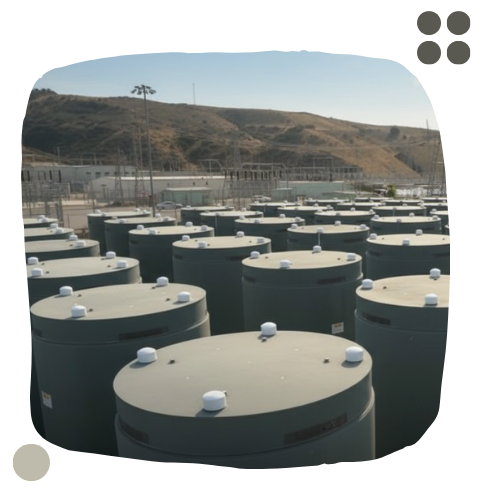
Clay Adsorbents are a Game Changer to remove heavy metals
Clay adsorbents bind to heavy metals through a combination of ion exchange and strong electrostatic attraction, pulling dissolved metal ions onto their highly charged, high-surface-area mineral surfaces. Once bound, the metals become immobilized within the clay structure, enabling efficient and safe removal from fracking produced water.
The expected disposal costs are significantly lower than current products available on the market.